"Very often my courses are attended by composers. (Moreover, for a complete training of the student also the composition, like the management technique, must be an integral part of the young director's baggage).
A couple of times I happened to come across people who complained about a lack of contact with sound, and attributed the cause to the technologies that are nowadays used in recording rooms.
Here, in fact, between the sound and the director there are lost filters. One of these, probably useful for the practical purposes of recording, but in my opinion misleading, is the use by everyone - conductor and orchestral - of headphones that send the impulse of the metronome.
Consequently in the relationship - arm / reaction of the orchestra - an intruder is interspersed, the classic tick in the headphones that marks the time. One of the participants in one of my masterclasses a couple of years ago was mainly animated by this desire: to find direct contact without intermediaries between him and the sound.
Some time later he left me a testimony that struck me for the sharpness and depth of the observations and that I like to report in full.
A question that is often addressed to musicians by non-professionals is: 'but what do those gestures that the conductor does? they have a precise function, is there always a recognizable pattern in its movements? is it a universally agreed code?
What people don't know is that musicians, orchestra teachers often ask this question too! so it happens that often, to complete an performance, you rely on the experience of the orchestras, rather than the skill of the conductor who, not infrequently, proposes himself with very scenographic but not very effective and explanatory gestures for the orchestra.
I was lucky enough to participate in an orchestral masterclasses course held by Maestro Ennio Nicotra.
What struck me most was the clarity of his gesture and the great communication.
The orchestral conducting is, in a wide range, a musical direction, it is the transmission of an interpretative thought and an overview of the score; but in detail it must be an element of coordination and a constant, absolute and shared reference point for the whole orchestra.
For this, a conducting gesture is required that leaves no room for doubt and has the advantage of immediately transmitting the conductor's wishes to the orchestra.
Maestro Ennio Nicotra has these qualities: You can be a great conductor even if you don't know how to teach this art, Ennio has the ability and generosity to be able to do both things very well".
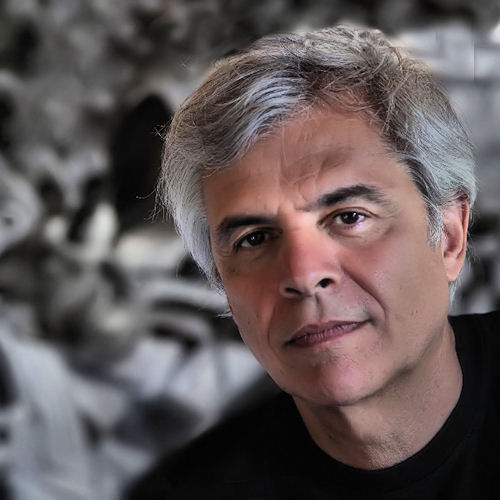
Stefano Mainetti- Composer and orchestral conductor